
How Filipino Talent Supports Global Tech and Telecom Companies
Filipino professionals play a growing role in supporting global tech and telecom companies through engineering, support operations, and digital infrastructure management.
BUSINESS GROWTHREMOTE WORK INSPIRATIONENTREPRENEURSHIPTALENT ACQUISITIONSTARTUPS
YesHire Remote Team
3/9/20264 min read
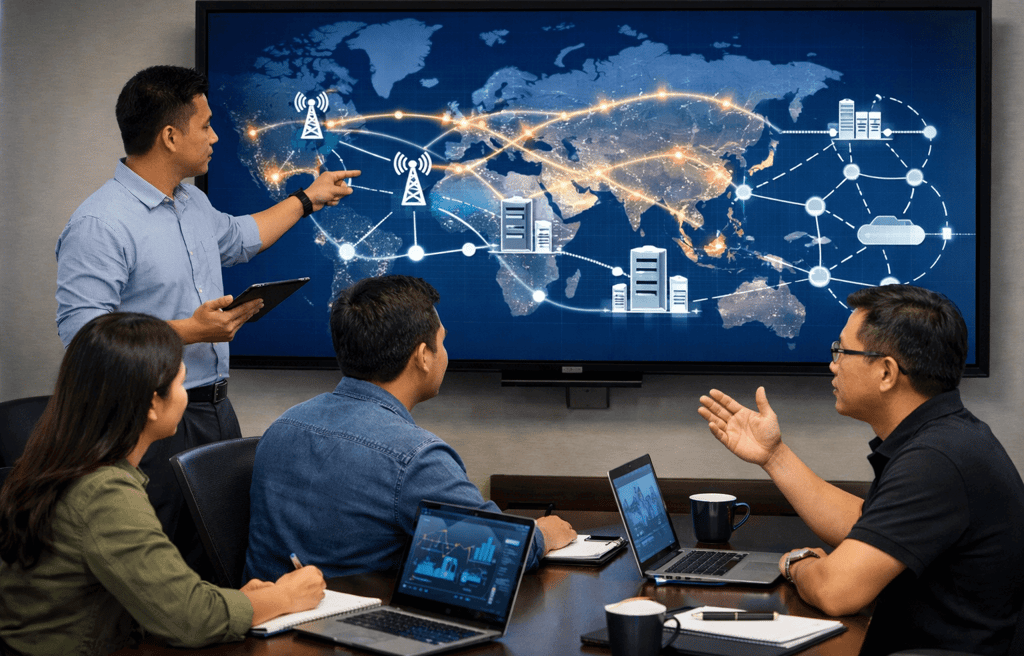

Technology and telecommunications companies operate on a global scale, but the teams supporting those systems are often distributed across multiple regions. Over the past decade, the Philippines has become one of the most important talent hubs helping global tech and telecom companies maintain operations, scale support teams, and manage digital infrastructure.
From network monitoring and technical support to engineering coordination and operations management, Filipino professionals play a growing role in keeping global systems running smoothly.
The Operational Backbone of Global Platforms
Modern tech platforms rely on 24/7 uptime. Telecom networks, SaaS platforms, and digital infrastructure must function continuously across time zones. This requirement creates a constant demand for technical operations teams that can monitor systems, troubleshoot issues, and support customers around the clock.
The Philippines fits naturally into this operational model. The country’s workforce has extensive experience supporting international businesses, particularly in industries where uptime, responsiveness, and system reliability are critical.
Filipino engineers, analysts, and operations specialists often manage tasks such as:
Monitoring network health and connectivity signals
Investigating service disruptions or latency issues
Coordinating infrastructure maintenance
Supporting telecom customer operations
Managing platform dashboards and monitoring tools
These roles may not always be visible externally, but they are essential to the stability of global platforms.
Strong Technical Communication Skills
One of the biggest challenges in distributed technical teams is communication. Infrastructure teams frequently collaborate with engineers, product managers, and operations staff across different countries.
Filipino professionals are known for strong English proficiency and the ability to communicate clearly with global teams. This is particularly valuable when technical issues need to be explained across departments.
For telecom and technology companies, this communication layer becomes critical when teams must quickly diagnose problems, coordinate fixes, and update stakeholders.
Clear technical communication often reduces delays in resolving operational incidents.
Supporting Telecom Infrastructure and Network Operations
Telecommunications infrastructure requires constant monitoring. Network performance, routing behavior, signal strength, and system capacity must be tracked continuously.
Many telecom companies build distributed teams responsible for monitoring these systems in real time. Filipino specialists frequently support these operations by working with monitoring dashboards, telecom management software, and infrastructure management platforms.
These teams assist with identifying unusual patterns in network traffic, flagging system warnings, and escalating technical issues when necessary.
Because telecom systems serve millions of users simultaneously, early detection of problems is essential to avoid widespread service disruptions.
Remote Collaboration Across Global Engineering Teams
The shift toward remote and distributed teams has also accelerated the demand for technical talent outside traditional tech hubs.
Filipino professionals now work closely with engineering teams in North America, Europe, and Asia. Many are involved in technical documentation, operations coordination, and infrastructure support functions that help engineering teams focus on product development.
In many companies, Filipino operations specialists act as the coordination layer between infrastructure monitoring tools and engineering teams responsible for deeper system fixes.
This type of operational support helps global teams maintain speed while keeping complex systems organized.
Organizations expanding their data outreach strategies often rely on accurate industry data to identify relevant infrastructure partners and technology companies. Many teams sourcing contacts in this sector rely on Tech, Media and Telecommunications industry lead datasets to understand where these companies operate and who manages their technical operations.
Experience in Scalable Global Operations
The Philippines has decades of experience supporting international companies through business process outsourcing and technical services.
This experience has translated into a workforce that is comfortable working with:
International service standards
Global communication workflows
Technical escalation processes
Infrastructure monitoring platforms
Customer-facing technical support systems
Because of this familiarity, many technology companies find it easier to integrate Filipino teams into their global operations.
The ability to plug into existing workflows without long adjustment periods makes distributed teams far more effective.
The Role of Filipino Talent in Digital Infrastructure Growth
As global technology platforms continue to expand, the demand for reliable operational support will only increase.
Cloud infrastructure, telecom networks, SaaS platforms, and digital services all require specialized teams to monitor performance and maintain reliability. Filipino professionals are increasingly filling these roles across companies that operate internationally.
This trend reflects a broader shift toward distributed technology operations, where infrastructure management, monitoring, and coordination can take place from multiple regions simultaneously.
What This Means
Global technology systems are becoming too complex to operate from a single location. Distributed operations teams are now essential to maintaining uptime, reliability, and customer support.
Filipino talent has become a key part of that system, supporting telecom networks and technology platforms that serve users around the world.
Companies that rely on accurate infrastructure data, clear communication, and responsive operational teams are better equipped to keep their systems stable.
When data behind outreach systems stays accurate, global operations teams can reach the right technical contacts faster.
When data decays, even the best outreach systems struggle to reach the people responsible for keeping networks running.
Related Article:
Why Global Startups Are Turning to Filipino Remote Talent
The Secret Behind the Filipino Work Ethic: Why Clients Keep Coming Back.
7 Reasons Outsourcing to the Philippines Saves You More Than Money
The Future of Remote Work in Southeast Asia
Why 2026 Is the Year of Borderless Hiring
How AI Is Changing the Way Remote Teams Work
Why Small Businesses Are Adopting Remote-First Models
The 3 Mistakes Companies Make When Managing Remote Teams
What Western Managers Can Learn from Filipino Work Values
Inside YesHire Remote: How We Match Global Companies with Filipino Talent
The YesHire Advantage: Building Teams That Grow With You
Should We Thank AI Every Time It Helps Us?
The Hidden Cost of Ignoring Time Zone Overlaps
The Rise of the Global Filipino Professional
How to Onboard Remote Employees Like a Pro
Why SaaS Startups Are Hiring Filipino Teams for Sales Operations and Prospect Research
How Filipino Analysts Support FinTech Startups With Market Research and Competitive Intelligence
Why AI Startups Are Hiring Filipino Teams for Data Labeling and Model Training
Why MSP Companies Are Hiring More Filipino L2 Engineers for Cybersecurity Support
How Filipino Virtual Teams Are Supporting Healthcare Startups With Operations
Why the Philippines Remains the World's Leading Hub for BPO Talent
Why Many Global Manufacturing Firms Continue Expanding Operations in the Philippines
Why Global Architecture Firms Are Hiring Filipino CAD and SketchUp Specialists
Why Consulting Firms Are Building Filipino Outreach Teams
Connect
Streamline your hiring with pre-vetted talent.
Get hiring tips and updates — straight to your inbox.
support@yeshireremote.com
© 2025. All rights reserved.
YesHire Remote (Proudly Filipino!)
Rizal St. Old Albay
Legazpi City, Albay
Philippines 4500
We Offer Online Courses for Freelancers:
Learn More about YesHire Academy